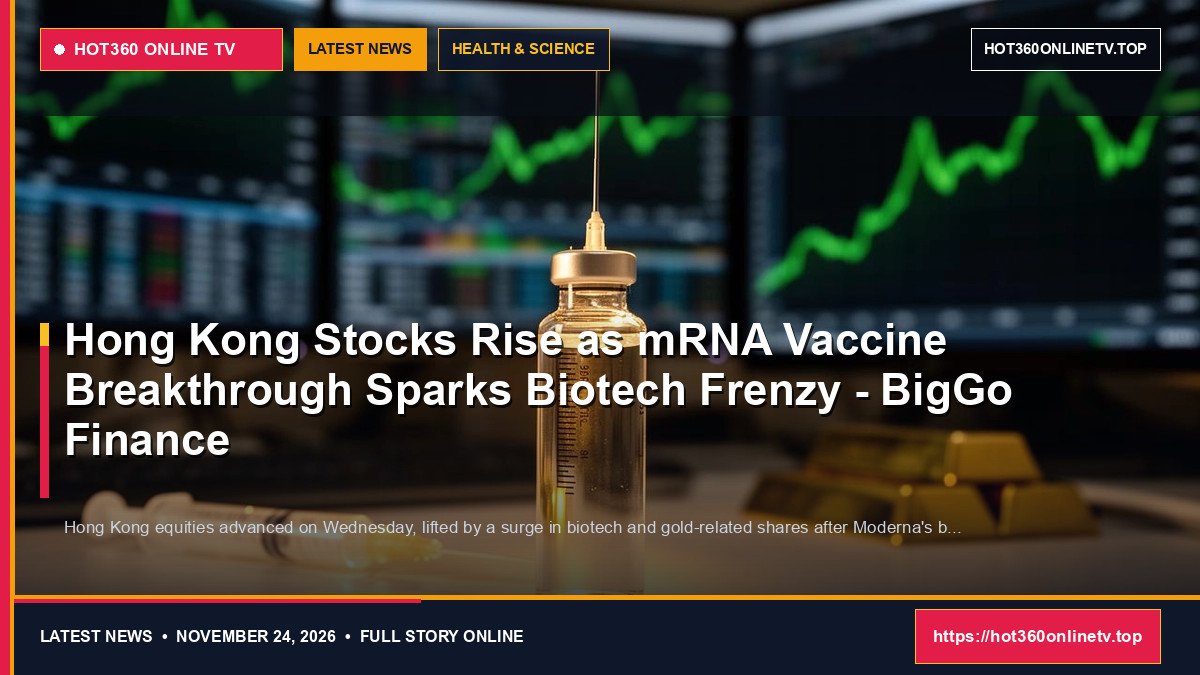
Hong Kong equities advanced on Wednesday, lifted by a surge in biotech and gold-related shares after Moderna's breakthrough in mRNA cancer vaccine development and a rally in bullion prices. The Hang Seng Index rose 203 points, or 0.8%, to close at 25,698, with turnover reaching HK$269.12 billion (approximately $8.4 billion). The Hang Seng China Enterprises Index added 0.9% to 8,547, while the Hang Seng Tech Index edged up 0.39% to 4,700.
The session's standout story was the explosive rally in mRNA-related and innovative drug stocks. Moderna (MRNA) soared 176% in overnight U.S. trading after its mRNA-based personalized cancer vaccine achieved a major breakthrough in late-stage clinical trials. The news rippled through Hong Kong's biotech sector, sending Everest Medicines (1952.HK) up 41.43% to HK$33.66 on turnover of approximately $133.8 million. 3D Medicines (1244.HK) jumped 56.88%, CanSino Biologics (6185.HK) surged 37.36%, and GenScript Biotech (1548.HK) climbed 13.62%.
Sino Biopharmaceutical (1177.HK) was the best-performing blue chip, rallying 12.53% after reporting first-half profit growth of 1.4% that beat expectations and drawing praise from multiple brokerages. CSPC Pharmaceutical (1093.HK) rose 9.61% after posting a near 140% jump in interim profit and raising its dividend by 28.6% to 18 HK cents. Other pharma names also advanced, with WuXi Biologics (2269.HK), Innovent Biologics (1801.HK), WuXi AppTec (2359.HK), Hansoh Pharmaceutical (3692.HK), and BeiGene (6160.HK) all gaining between 1% and 3%. Hengrui Medicine (1276.HK) bucked the trend, falling 9.63% after analysts flagged disappointing quarterly results.
Kuaishou Technology (1024.HK) was the worst-performing Hang Seng constituent, tumbling 11.01% after the short-video platform reported a 30.3% year-over-year decline in adjusted profit for the second quarter. Daiwa downgraded the stock to "hold" following the results. Other major tech names fared better: Tencent (700.HK) rose nearly 1%, Alibaba (9988.HK) gained 1.61% ahead of its earnings release, Baidu (9888.HK) rebounded 2.45%, and JD.com (9618.HK) added 1.69%.
Gold-related stocks rallied as spot gold briefly broke above $4,500 per ounce. Zijin Gold International (2259.HK) surged 11.25%, while Zijin Mining (2899.HK), Lingbao Gold (3330.HK), and Shandong Gold (1787.HK) all rose more than 5%. Jewelry retailers also benefited, with Laopu Gold (6181.HK) up 8.12% and Chow Tai Fook (1929.HK) gaining 5.68%.
Automakers broadly advanced, with Li Auto (2015.HK) up 5.53%, Nio (9866.HK) and XPeng (9868.HK) rising more than 4%, Geely Automobile (175.HK) adding 3.4%, and BYD (1211.HK) climbing 2.69%.
The rally in Hong Kong followed a modest recovery on Wall Street, where the three major U.S. indexes ended a three-day losing streak with gains of about 0.2%. The market also drew support from news that the U.S. Treasury unexpectedly announced it would at least double its long-term bond repurchase program, sending the 30-year Treasury yield down more than 9 basis points and pushing the dollar index below 99 to a three-month low.
In other individual movers, Bank of East Asia (23.HK) jumped 5.71% to a more than five-year high after reporting a 0.4% increase in first-half profit and raising its interim dividend by nearly 18%. Kingsoft Cloud (3896.HK) rose 7.65% after narrowing its interim loss to 440 million yuan. AAC Technologies (2018.HK) fell 6.1% despite a 2.9% rise in interim net profit. Nine Dragons Paper (2689.HK) plunged 16.8% even after issuing a positive profit alert projecting a 92.4% to 103.7% jump in full-year net profit attributable to shareholders.
China Resources Beer (291.HK) declined 2.47% after multiple brokerages cut their target prices following a 10% drop in interim profit and a reduced interim dividend. Hengan International (1044.HK) fell 5.89% after Citi lowered its target price to HK$22.8. CMOC Group (3993.HK) rose 1.33% after reporting an 86% jump in interim profit and resuming its interim dividend. Pop Mart (9992.HK) gained 2.13% ahead of its results, while ZTO Express (2057.HK) extended its post-earnings decline, falling 5.34%.
Valuation concerns across the Pacific
While Hong Kong investors celebrated the biotech breakthrough, a different narrative was unfolding in U.S. markets. Warren Buffett, the legendary investor who retired as Berkshire Hathaway (BRK.A) (BRK.B) CEO at the end of 2025, recently offered a sobering assessment of current market conditions. In a July interview, when asked about today's market dynamics, Buffett said, "It's tough to find value when everybody is preferring gambling."
The Oracle of Omaha's warning carries weight given his track record. He used similar gambling references in April 2022, and within two months the S&P 500 had entered a correction. The Buffett Indicator, which measures the ratio of total stock market capitalization to GDP, recently hit an all-time high of approximately 238% to 240%, well above the 200% threshold Buffett once described as "playing with fire" in a 2001 Fortune article.
Berkshire's actions over the past several years reinforce this cautionary stance. Under Buffett and his successor Greg Abel, Berkshire has been a net seller of equities in 14 of the last 15 quarters, unloading a cumulative net $175 billion in stock since October 2022. While Abel deployed roughly $17 billion into Alphabet during the second quarter of 2026, making Berkshire a net buyer for the first time in 14 quarters, the broader pattern of selling underscores the challenge of finding attractively valued opportunities in an historically expensive market.
The divergent signals from Hong Kong and the United States highlight the complex crosscurrents facing global investors. Hong Kong's biotech rally demonstrates the market's appetite for companies with genuine clinical breakthroughs, particularly in the high-stakes field of mRNA therapeutics. The surge in gold-related names reflects both the metal's record-breaking run and broader concerns about currency debasement and fiscal sustainability.
For investors, the juxtaposition of Hong Kong's speculative fervor in biotech with Buffett's warning about "gambling" in U.S. markets serves as a reminder that valuation discipline matters even amid genuine technological progress. The mRNA breakthrough is real, but the question of which companies will ultimately capture value from the technology remains open.
Once added, BigGo Finance appears first in Google Search Top Stories, so you get the broadest, most up-to-the-minute, and most comprehensive global financial news first.