Story Breakdown & Key Highlights
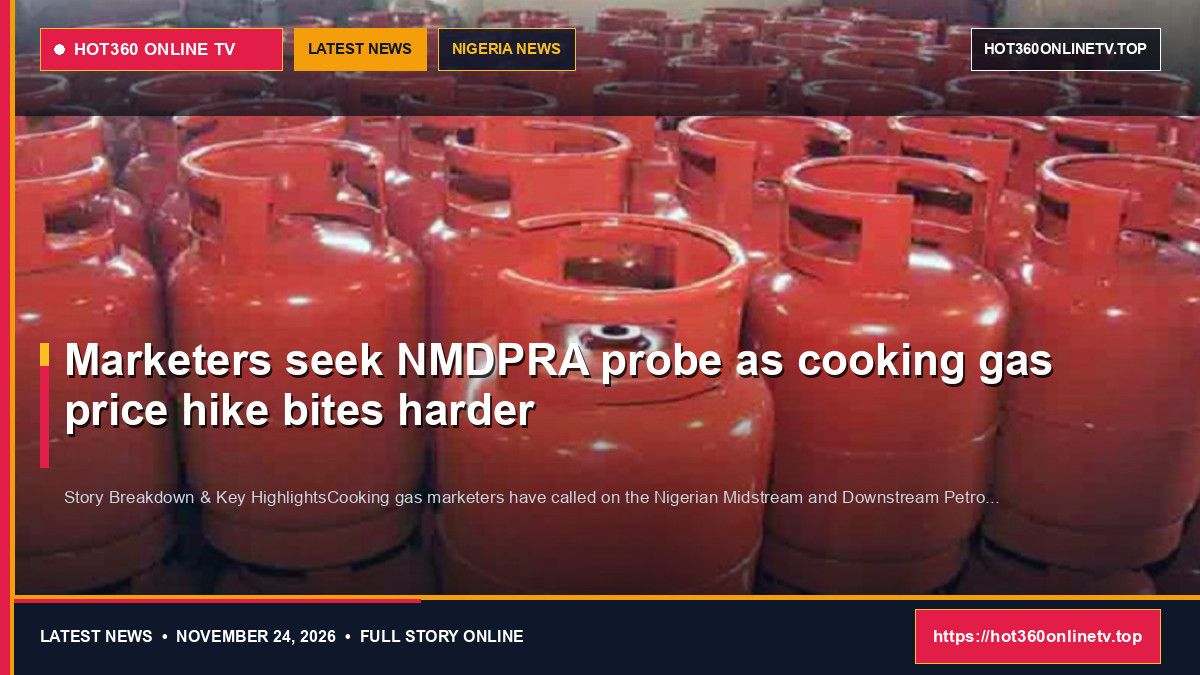
- Cooking gas marketers have called on the Nigerian Midstream and Downstream Petroleum Regulatory Authority (NMDPRA) to investigate supply distribution, depot inventories and...
- The call comes amid growing concerns over the widening gap between domestic LPG supply and retail prices, with consumers in Lagos and Ogun States paying between N1,700 and N2,000...
Full Report
Cooking gas marketers have called on the Nigerian Midstream and Downstream Petroleum Regulatory Authority (NMDPRA) to investigate supply distribution, depot inventories and pricing practices in the domestic market, as consumers continue to grapple with rising Liquefied Petroleum Gas (LPG) prices despite increased local production.
The call comes amid growing concerns over the widening gap between domestic LPG supply and retail prices, with consumers in Lagos and Ogun States paying between N1,700 and N2,000 per kilogramme in some locations.
In Akute, Ogun State, a consumer, Mrs Comfort Aduloju, said she bought cooking gas at N1,900 per kilogramme on Monday, lamenting that the persistent price increases had compounded the economic hardship facing households.
“Cooking gas sold at N1,900 this morning in my area. Day by day, it’s getting too suffocating being a Nigerian living in Nigeria. I am exhausted mentally and physically and I am just hanging on by a thread,” she lamented.
Similarly, a resident of Ogba, Lagos, Mr Bode Olusanya, said the product was selling at N1,800 per kilogramme, compared with N1,200, in early October.
He described the increase, coming weeks before Christmas, as an additional financial burden on households already struggling with the rising cost of living.
Other residents who spoke to the Nigerian Tribune also confirmed the persistent increase in retail prices.
Reacting to the development, when contacted on Monday, Executive Secretary, Nigerian Association of Liquefied Petroleum Gas Marketers (NALPGAM), Mr. Bassey Essein, urged the NMDPRA to investigate the apparent disconnect between rising domestic production and the high prices confronting consumers.
He noted that although locally produced LPG accounted for approximately 92.3 per cent of Nigeria’s total receipts in October 2026, the country’s stock sufficiency declined to 14.8 days, significantly below the 30-day benchmark.
According to October downstream market statistics attributed to the NMDPRA, domestic supply stood at 4.8 kilotonnes per day, while imports contributed 0.4 kilotonnes, bringing total daily receipts to 5.2 kilotonnes.
Daily consumption, however, was estimated at approximately 5.0 kilotonnes, leaving a marginal surplus of just 200 tonnes daily. The NALPGAM’s executive secretary said the narrow gap between supply and consumption offered little opportunity to rebuild depleted inventories or protect the market against potential supply disruptions.
He further observed that total LPG receipts increased from 4.7 kilotonnes daily in September to 5.2 kilotonnes in October, while domestic supply rose from 4.5 to 4.8 kilotonnes per day.
“Despite the improvement, stock sufficiency declined from 15.9 days in September to 14.8 days in October, raising questions about the resilience of the domestic supply chain,” he said
Stating the association’s position, he explained that increased domestic production did not automatically translate into sufficient commercial volumes for independent marketers or affordable prices for consumers.
He identified supply allocation arrangements, concentration of production among a few major suppliers, depot pricing, transportation costs and seasonal demand as possible factors contributing to the persistent price increases.
Citing a November 6 market report, NALPGAM’s scribe said Dangote Refinery’s LPG gantry price had risen to N1,000 per kilogramme, while five monitored Lagos depots quoted approximately N1,450 per kilogramme.
He said the disparity between producer prices and the rates at which independent marketers purchased the product highlighted possible challenges within the downstream distribution chain.
The association also expressed concern over the limited number of LPG supply sources publishing daily prices, despite the existence of more than 16 recognised supply sources.
Essien said only about three sources consistently displayed daily prices, calling on the regulator to establish whether the situation reflected genuine shortages, restricted commercial allocations, inventory management practices or inadequate price transparency.
NALPGAM’s executive secretary, however, cautioned against prematurely accusing suppliers of hoarding, insisting that the regulator needed to establish actual inventory levels, volumes committed to customers and quantities available for immediate commercial lifting.
He urged the NMDPRA to determine how much LPG was physically held in individual supply facilities, how much remained uncommitted and the daily volumes loaded and dispatched to independent marketers.
The association called for a comprehensive market transparency briefing covering daily production by individual producers, domestic allocations, depot inventories, available commercial stocks, ex-depot prices, loading activities, import volumes and distribution across the geopolitical zones.
The association also recommended a daily LPG market dashboard and mandatory stock and price reporting by major producers, terminals and depots to improve transparency and enable marketers to make informed purchasing decisions.
Furthermore, the association advocated an investigation into whether independent marketers enjoyed unrestricted access to locally produced LPG, arguing that increased domestic production would have limited benefits if market access remained constrained.
NALPGAM maintained that Nigeria should retain the flexibility to import LPG when necessary, warning that increased domestic production should not be used as a reason to discourage imports.
Essein argued that imports remained important for bridging supply gaps, rebuilding national inventories and introducing competitive pressure into the market.
ALSO READ: 2027 polls: INEC to test BVAS in 17,676 polling units, Saturday
ALSO READ: 2027 polls: INEC to test BVAS in 17,676 polling units, Saturday
He also called for increased investment in domestic storage infrastructure, noting that the 14.8-day stock sufficiency figure exposed the market to possible supply disruptions.
He stressed that the success of Nigeria’s domestic LPG production drive should be measured not only by volumes produced but also by the quantities made available to the domestic market, competitive wholesale prices and affordability for households.
According to NALPGAM, without addressing supply allocation, market access and pricing transparency, increased domestic production could coexist with persistent scarcity and high prices at the distribution and retail levels.
• Back to School, Back to Business A Fresh Start
• Relationship Hangout: Public vs Private Proposals – Which Truly Wins in Love?
“No” Is a Complete Sentence: Why You Should Stop Feeling Guilty
• “No” Is a Complete Sentence: Why You Should Stop Feeling Guilty
Relationship Hangout: Friendship Talk 2025 – How to Be a Good Friend & Big Questions on Friendship
• Relationship Hangout: Friendship Talk 2025 – How to Be a Good Friend & Big Questions on Friendship
Police Overpower Armed Robbers in Ibadan After Fierce Struggle
• Police Overpower Armed Robbers in Ibadan After Fierce Struggle
Get real-time news updates from Tribune Online! Follow us on WhatsApp for breaking news, exclusive stories and interviews, and much more. Join our WhatsApp Channel now